Cedar Grove, WI experiences weather that challenges trees year after year. Summer months bring heat and dry spells that put stress on tree roots. Winter delivers heavy ice loads that can break branches and damage bark.
Understanding how weather patterns affect tree health is important for property owners here. Heavy rain and high moisture can weaken roots and cause fungal growth. Ice accumulation during winter damages branches and bark. Strong winds break limbs and stress trees over time.
Property owners need to understand these weather impacts on their trees. This knowledge allows you to protect valuable trees before problems start. Proper tree management prevents costly damage and keeps properties attractive for years.
Common Weather Challenges for Cedar Grove, WI Trees
This area goes through some pretty dramatic seasonal changes that test urban trees. Maple and oak trees usually handle Wisconsin winters much better than pine trees do. Birch trees often struggle the most when we get those sudden temperature swings in spring.
1. Heat Stress and Sunburn on Trees
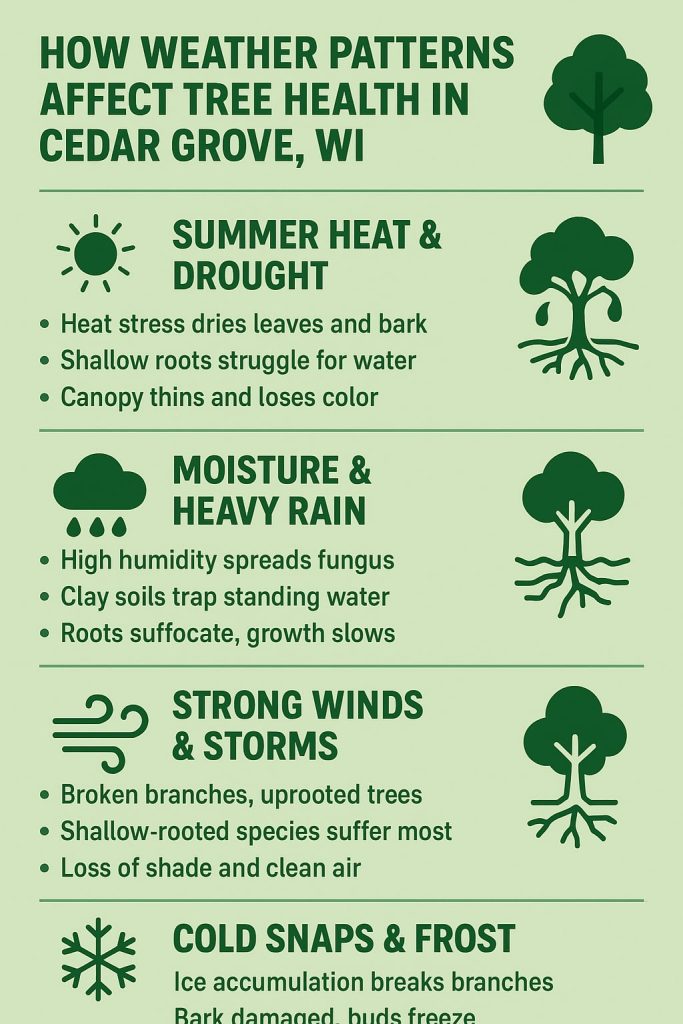
Long summer heat dries out leaves and can actually burn tree bark on the sunny side. Root systems suffer too because dry soil makes it hard for trees to get enough water. Trees in open areas without shade protection face the worst sunscald damage.
2. Drought Effect on Tree Health
Drought stress shows up as wilting leaves and early leaf drop throughout Cedar Grove’s local urban forest areas. Young and newly planted tree species struggle most during dry spells because their shallow roots can’t find water. You’ll notice a stressed tree canopy loses its thickness and bright healthy green color pretty fast.
3. Moisture and Humidity Levels
High humidity around here makes fungal problems spread fast through tree leaves and bark. Dry spells with low humidity stress out street tree systems in urban areas pretty badly. Smart tree planting and good tree care means keeping soil moisture just right – not soaked, not bone dry.
4. Heavy Rain and Flooding Concerns
Cedar Grove’s clay soils get pretty soggy after big rainstorms and don’t let water drain away fast. This standing water actually suffocates tree roots, and you will need help with oak wilt disease treatment. Urban green areas get hit worse because pavement traps water and really messes with normal tree growth.
5. Strong Wind and Storm Damage
Strong winds around the area break tree branches and uproot entire trees during severe storm events. Shallow-rooted trees in the urban environment get hit hardest and trees may lose major canopy sections fast. When tree canopy cover gets damaged badly, it impacts human health by removing valuable shade and clean air.
6. Cold Snaps and Frost Events
When this region gets sudden temperature drops after those nice warm days, trees really suffer damage. Bark splits open, buds freeze solid, and you’ll see frost cracks running down tree trunks. Smart urban plan decisions consider the number of trees and protective effects of trees during cold snaps.
7. Snow and Ice Accumulation
When we get those big winter storms, the weight of snow and ice really does a number on tree branches. You’ll see broken limbs falling onto houses, sidewalks, and parked cars all around this area. Smart urban forestry practices help us keep all the benefits of tree coverage without putting people at risk.
8. Lightning Strikes and Storm Impact
Lightning strikes can split tree trunks right down the middle or kill trees on the spot. Trees that survive a lightning hit often slowly decline over the next few years. Urban greening projects need to plan for these losses because increased tree mortality from storms affects whole neighborhoods.
9. Seasonal Changes in Cedar Grove, WI
Regional trees go through big changes each season – spring growth, summer heat stress, fall prep, and winter sleep. Local tree species need different care at each stage to stay healthy and strong. Good tree planting initiatives include seasonal maintenance like mulching and pruning to keep tree shade working for years.
10. Prolonged Cloud Cover and Tree Growth
When Cedar Grove gets weeks of cloudy weather, trees across the area don’t get enough sunlight for proper photosynthesis. Flowering and fruit trees really struggle during these dark periods and often skip blooming entirely. Learning how to protect your trees during cloudy spells keeps your urban tree canopy healthy and productive.
How to Protect Your Trees from Weather-Related Stress
You can take some pretty simple steps to help your trees handle local tough weather better. Regular care like watering right and keeping up with pruning really pays off when storms hit.
- Give trees deep water during those hot spells
- Put down fresh mulch every spring around trees
- Cut off dead branches before big storms come
- Make sure water drains away from tree roots
- Knock heavy snow off branches when you can
- Stake young trees so winds don’t tip them
- Call professional tree care for tricky pruning work
- Get expert help right after storm damage happens
Need Help? Get A Free Estimate
Top Chop Tree Service & Land Management serves Belgium, Cedarburg, Fredonia, and surrounding neighborhoods with professional tree care. Our family-owned business provides tree removal, trimming, stump grinding, and emergency services.
Our qualified arborists handle both residential and commercial properties safely. We’re fully insured and guarantee your satisfaction on every job. Call today for your free quote!
Final Words
Weather here in Cedar Grove can be pretty rough on trees – that’s just how it is. Hot summers, cold winters, and those sudden storms all add up to stress your trees out. But here’s the thing: you can actually do something about it. Smart tree maintenance helps them survive whatever weather comes their way. Get started with proper tree care and your trees will last for many years ahead.
FAQs
What are the signs of drought damage in local Cedar Grove trees?
Common tree problems from drought include brown leaf edges and early leaf drop in summer. Trees in Wisconsin show stress differently, so watch individual trees for wilting, yellowing, or branches that look dried out. These signs mean your trees need water fast.
Can heavy rain and flooding permanently harm tree roots?
The relationship between tree roots and soil drainage matters a lot during flooding around the area. Standing water can rot root systems and cause problems related to tree stability later. Heavy flooding definitely slows down tree growth rates for several years after.
How do snow and ice storms impact tree safety near homes?
Heavy snow creates serious safety risks and sometimes requires emergency tree removal near houses. The impact of urban ice storms on trees within neighborhoods is pretty severe around here. Healthy trees reduce winter dangers, but increased tree canopy coverage means more health and well-being risks if branches fall during storms.