
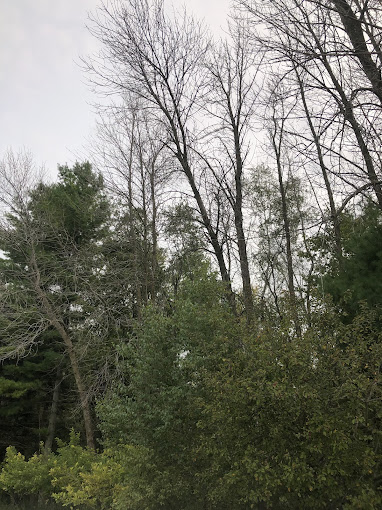
Is there a tree that no longer fits your landscaping plans? You might wonder how much it will cost to remove the unwanted trees. Well, in Wisconsin, homeowners can expect to pay between $300 and $2000 for tree removal depending on various factors.
Indeed, There are several factors affecting tree removal pricing in Wisconsin, and understanding these can help you make the smart decision to make your budget. Let’s dive into what you need to know before making that call.
It’s the most obvious factor influencing tree removal pricing. Removing more giant trees looks pretty complex as it includes climbing, rigging, and extra care and labor to maintain safety.
Here, both height and diameter are taken into account, with taller and wider trees generally being more expensive to remove.
However, here’s a breakdown of the average cost range depending on the size of the trees –
Removal costs for small trees, such as ornamental trees or young trees, typically range from $150 to $500.
Removing medium-sized trees, including common shade trees like maples or elms, can cost between $500 and $1,000.
Removing large trees, such as mature oaks or pines, can be more complex and expensive. The cost for these trees generally falls between $1,000 and $2,000.
For exceptionally tall trees, removal costs can exceed $2,000.
The type of tree impacts the complexity of tree removal. And, you know, the more complexity, the more price increases. For example, the Box Elder trees of Wisconsin can be up to 82 feet tall.
Despite their height, they are generally easier to remove than other species like Honey Locust trees. Honey Locust trees have sturdier wood and structural characteristics.
Oak trees are also difficult to remove due to their dense wood and extensive root systems. These additional complexities can significantly increase the price of tree removal.
If trees are located near buildings, power lines, or other structures, it may let you pay some extra money. In that situation, the arborists must maintain additional precautions and specialized equipment to remove the tree, avoiding property damage. Hence, the cost increases.
Similarly, trees in hard-to-reach areas may add to the cost. It also requires more labor and machinery to reach the location.
In some cases, an emergency tree removal costs more money than a scheduled removal because it can necessitate quick maintenance of crews and equipment.
Emergency removals often require immediate attention, which means the service provider may need to rearrange their schedule and deploy additional resources, leading to higher costs.
A healthy tree is more straightforward to remove than a diseased and unstable tree. However, if your desired tree seems weak and more likely to cause property damage, the service team needs to handle it with unique techniques and equipment, which may affect the tree removal pricing.
Do you want a clean and worry-free tree removal service? Well, it requires some additional services, which may include removing debris, leaves, wood pieces, or unsafe stumps before and after the tree removal. However, these services would increase some extra costs.
Tree removal in Wisconsin, may require some permits, especially for the rare ones. The cost and process of obtaining the local permission can add to the overall expense.
At a glance, the Average Pricing of tree removal in Wisconsin
Understanding the factors affecting tree removal pricing in Wisconsin, can help property owners budget more accurately when hiring a tree care service.
Moreover, it’s a good idea to contact a local tree removal expert who can give you an accurate quote depending on the situation. This way, you’ll be sure you’re making the best decision for your property.
The cost of tree removal in Wisconsin is influenced by several factors, including the size and height of the tree, its location on the property, the tree's health and condition, accessibility for equipment, and whether any additional services such as stump grinding or wood removal are required.
Yes, the type of tree can affect the removal cost. Hardwood trees like oak or maple are generally more challenging to remove due to their density and weight, potentially increasing the price. Additionally, certain species may have root systems or branch structures that complicate removal.
If a tree is located close to a house, fence, power lines, or other structures, the removal process becomes more complex and risky. This may require specialized equipment or techniques, such as crane removal, which can significantly increase the cost.
Yes, there can be seasonal price variations for tree removal. During winter months, when demand for tree services is lower, prices may be reduced. However, extreme winter weather can also complicate removal, potentially affecting pricing. Conversely, prices may be higher during the spring and summer when demand is higher.
The condition of the tree is a major factor in determining the cost. A dead or dying tree may be more dangerous to remove, especially if it’s unstable. Conversely, a healthy tree might require more effort to cut down due to its strength, which can also affect the price. If the tree is diseased, additional care may be needed to prevent the spread of the disease, which could increase costs.

Quick Links
Open
© 2026 All Rights Reserved