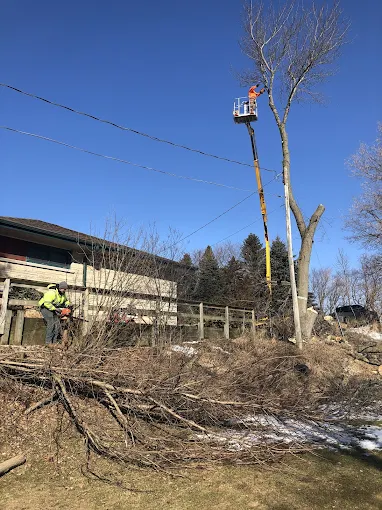
Common signs of tree failure include deep trunk cracks, hollow sections, and a severe lean. You should also look for fungal growth at the base or root upheaval. These issues often mean the tree is structurally weak and poses a safety risk.
Read this blog to spot these dangers early. You will learn how to save your Cedar Grove property from expensive damage.
When Do You Need to Remove A Tree?
An on-time tree removal service reduces the cost. Therefore, you need to be aware of the signs so that you can remove it before it falls and damages your property.
Is The Tree Suddenly Leaning?
A sudden lean in a Northern Red Oak, Pine, or Cedar is a major emergency. This often means the roots are pulling out of the ground. If the lean exceeds 15 degrees from the vertical, the risk of collapse is high.
Does The Trunk Have Cracks?
Deep splits or cavities in a tree indicate internal decay. These cracks weaken the main support of the tree. A hollow trunk often loses up to 30% of its strength. This makes it very dangerous during high winds.
Are There Mushrooms At The Base?
Fungi or mushrooms near the roots of a White Pine or other trees signal root rot. This decay happens inside where you cannot see it. Soft wood at the base means the tree can no longer anchor itself properly in the soil.
Is More Than 50% Of The Canopy Dead?
If half of your Black Walnut or other large trees have no leaves, it is likely dying. Trees in this state struggle to recover from drought or pests. A dead canopy in Cedar Grove makes the tree brittle and very likely to drop heavy wood.
Are Large Dead Branches Hanging?
You also need to watch for “widow-makers” in your Green Ash or other unkempt trees. Overgrown trees affect roofs and gutters. These are large, dead limbs that are stuck high up in the canopy. They can fall at any moment. These heavy branches cause thousands of dollars in roof damage every year.