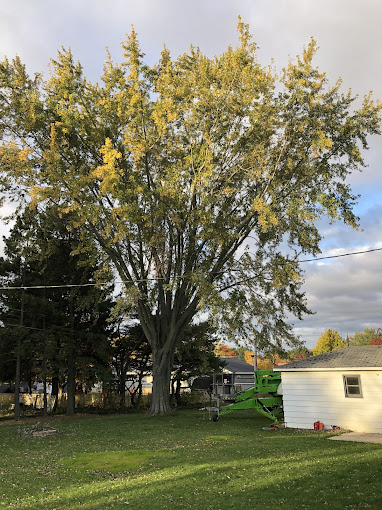
Overgrown trees scrape against shingles every time the wind gets stronger. Fallen and piled-up leaves from these trees fill your gutters and trap water. As a result, you get issues like leaks, rot, and mold. It weakens your roof and gutter system and shortens its lifespan.
This article explains how such trees affect your home. You’ll also learn simple steps to protect your roof and gutter.
How Do Overgrown Trees Damage Roofs?
Overgrown trees damage roofs by scraping shingles with their branches constantly. You’ll see holes and weak spots that let water leak inside. Heavy limbs can also fall and puncture through roofing materials. If actions are not taken, you may face challenges, such as:
Branches Scraping and Breaking Shingles
Branches rubbing against your roof strip away the protective granules. Lake Michigan sends strong gusts that push limbs into your shingles. It wears down your roofing materials faster than usual. The heavy ice in winter weighs down branches until they snap. When they fall, they punch holes right through your roof.
How Can Windy Weather Turn Branches Into Roof Hazards?
Windy weather can turn branches into roof hazards by loosening dead or weak limbs. These branches break off and crash onto your shingles during storms. You’ll face expensive damage from impacts and punctures if trees aren’t trimmed.
Trapped Debris and Moisture Build-Up
Fallen leaves and twigs pile up in valleys on your roof. It blocks water from draining off and soaks into the wood underneath. The freeze-thaw cycles occur from December through March here. During this time, water freezes at night and expands inside tiny cracks. Those small cracks become bigger problems with each cold snap.
How to Remove Moisture From My Roof?
Removing the trapped moisture takes a few steps. Here’s what actually works:
- Add or clean roof vents
- Run bathroom fans outside
- Vent dryers away from home
- Seal attic air leaks
- Clear gutters and downspouts
- Dry wet spots with a vacuum
- Install vapor barriers if needed
- Trim trees regularly to allow sunlight on the roof
Moss, Algae, and Fungal Growth
Big tree canopies block sunlight from touching your roof directly. So the shingles stay damp. Summer humidity in Wisconsin makes the problem even worse. Dark algae streaks show up first on the shaded spots. Moss grows next and gets thicker every year if left alone. They lift your shingles and trap water against the underlayment.
How Do I Stop Moss From Growing on My Roof?
You need to cut back the shade and keep things clean to stop moss from growing on your roof. This is what prevents moss from taking over:
- Trim overhanging tree branches
- Clean gutters every season
- Remove all roof debris
- Apply zinc or copper strips
- Use moss-killing treatments
- Install preventive sealants
Wildlife and Pests Using Tree Access
Branches hanging over your roof give animals an easy way in. Around Cedar Grove, raccoons and carpenter ants are the usual suspects year-round. Animals use these overhanging branches to reach your roof and find weak spots. They chew through shingles, gnaw wood and metal flashing and tear holes in soffits These damages weaken structural integrity and get worse over time.
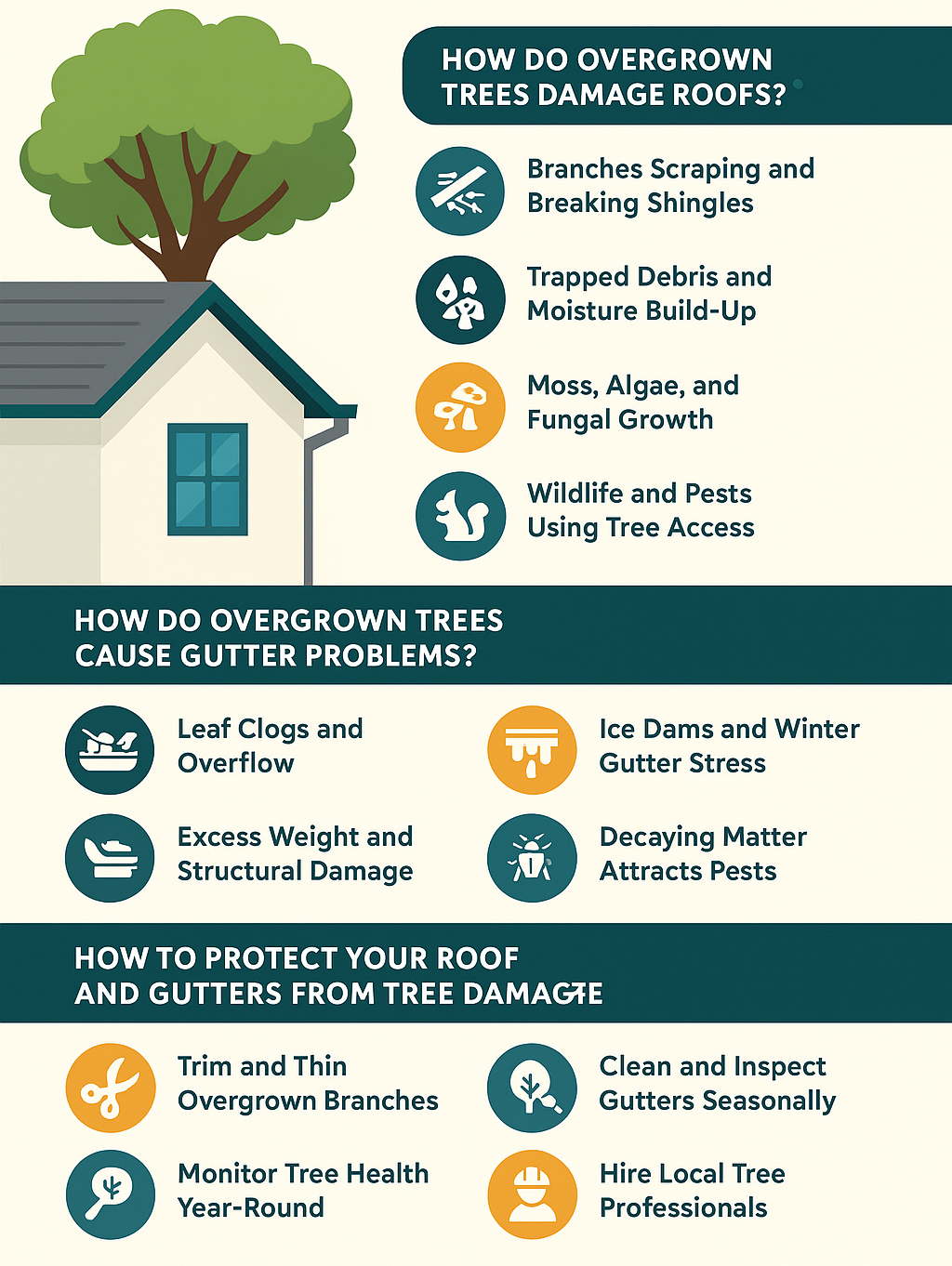
How Do Overgrown Trees Cause Gutter Problems?
Trees drop leaves and debris that clog your gutters fast. The blocked gutters overflow and send water down your siding. Heavy buildup adds weight that pulls gutters away from your house. Standing water attracts pests and creates breeding grounds for mosquitoes.
Leaf Clogs and Overflow
Fallen leaves fill your gutters and block water from draining properly. Cedar Grove has plenty of maples, oaks, and birches that shed leaves during autumn and create serious blockages. Water overflows and runs down your siding instead of through downspouts. This causes foundation erosion around your home and rots the wood fascia.
How Do You Stop Gutter Overflow?
Regular maintenance and system upgrades prevent most overflow problems. You can do the following to prevent them:
- Trim large branches that are blocking the gutters
- Clean gutters and downspouts regularly
- Add more downspouts if needed
- Adjust the slope for better drainage
- Install gutter guards or screens
- Use larger gutters if necessary
- Add splash guards at the corners
Ice Dams and Winter Gutter Stress
Winter meltwater refreezes accumulated water and leaves overnight. And if you don’t clean it on time, it will only add heavy weight to your gutter system. This extra weight pulls gutters away from the fascia boards. It blocks normal drainage and forces water up under your shingles.
How to Prevent Ice Dams in Gutters?
Keeping gutters clear and using heat helps stop ice buildup. Try these methods:
- Remove fallen leaves from the gutters
- Keep large branches trimmed to prevent shade and moisture
- Install heat cables inside gutters
- Remove snow from the roof fast
- Improve attic insulation now
- Add better attic ventilation
- Seal air leaks completely
Excess Weight and Structural Damage
Leaves, twigs, and moss buildup from overgrown trees and standing water put too much stress on gutters. As a result, the sections start to sag in the middle or collapse.
Metal fasteners also loosen their grip and pull away from fascia boards. It causes the water overflow, which get behind the gutters and soaks into your siding. The moisture rots your soffits and creates openings for more problems.
Decaying Matter Attracts Pests
Wet leaves and organic material stay damp inside gutters all year. This creates perfect breeding grounds for mosquitoes during warm months. Ants also build colonies in the decomposing debris that never dries out.
Moreover, rodents use clogged gutters as paths to reach your attic. The overflow gives them easy access through gaps in your soffits.
How to Protect Your Roof and Gutter from Tree Damage?
You can protect your home by trimming branches away from your roofline. Clean your gutters at least twice a year to prevent clogs. Also, watch for signs of tree disease or weakness throughout the year.
Trim and Thin Overgrown Branches
Keeping branches away from your roofline prevents most damage. Try trimming trees during late winter or early spring. This timing helps prepare your trees for growing seasons ahead and reduces breakage risks.
How Far Should Tree Branches Be From My Roof?
Your trees need proper clearance to avoid roof contact. Here’s the spacing you need:
- Keep branches 6-10 feet away
- Larger trees need 20-30 feet
- Prevents physical roof contact with trees
Clean and Inspect Gutters Seasonally
Clearing leaves after the fall and before the spring thaw prevents gutter issues. Flush your gutters with water to make sure they drain properly. Trimming hanging limbs before storm seasons also helps. You can also install guards if you have trees hanging over your home.
How Can I Install Gutter Guards?
Getting guards installed takes a few steps to do correctly. Here’s the process:
- Clean gutters first
- Slide guards under shingles
- Secure them to gutters
- Overlap all previous sections
- Cut and notch around corners
- Check stability and appearance
Monitor Tree Health Year-Round
Watching for cracks, root lifting, or fungal growth catches problems early. It also helps you save your home from major damage. Removing weakened or diseased trees before they fail saves money later.
-
How Often Should I Get My Trees Inspected?
Inspection frequency mostly depends on your tree’s age and condition. But you can follow these general guidelines:
- Every 2-3 years for regular inspection
- Annually for older trees
- After major weather events
- When you notice distress signs
- Before construction projects start
- After construction work finishes
Hire Local Tree Professionals
Complex trimming near power lines or rooftops puts you at serious risk. But skilled arborists handle safe pruning, complete debris cleanup, and land care. Choosing the right tree service here means finding experts who understand local weather patterns. But make sure they are familiar with the Village of Cedar Grove laws and permits (if any).
How Much Does Tree Service Cost in Cedar Grove, WI?
Prices vary based on the job size and tree condition. Here’s what you can expect:
- General services: $75-$200 hourly
- Tree trimming: $200-$1,500 total
- Tree removal: $400-$2,000+
Note:
|
Protect Your Roof and Gutter With Professional Help!
Top Chop Tree Service & Land Management serves Cedar Grove homeowners with expert tree trimming and removal services. We keep branches away from your roofline and clear debris before it clogs your gutters. Our team handles everything from routine pruning to emergency storm cleanup to ensure a safe home for you.
So, why wait? Schedule your free tree assessment today.